

Pattern Recognition Receptors Signaling Pathways
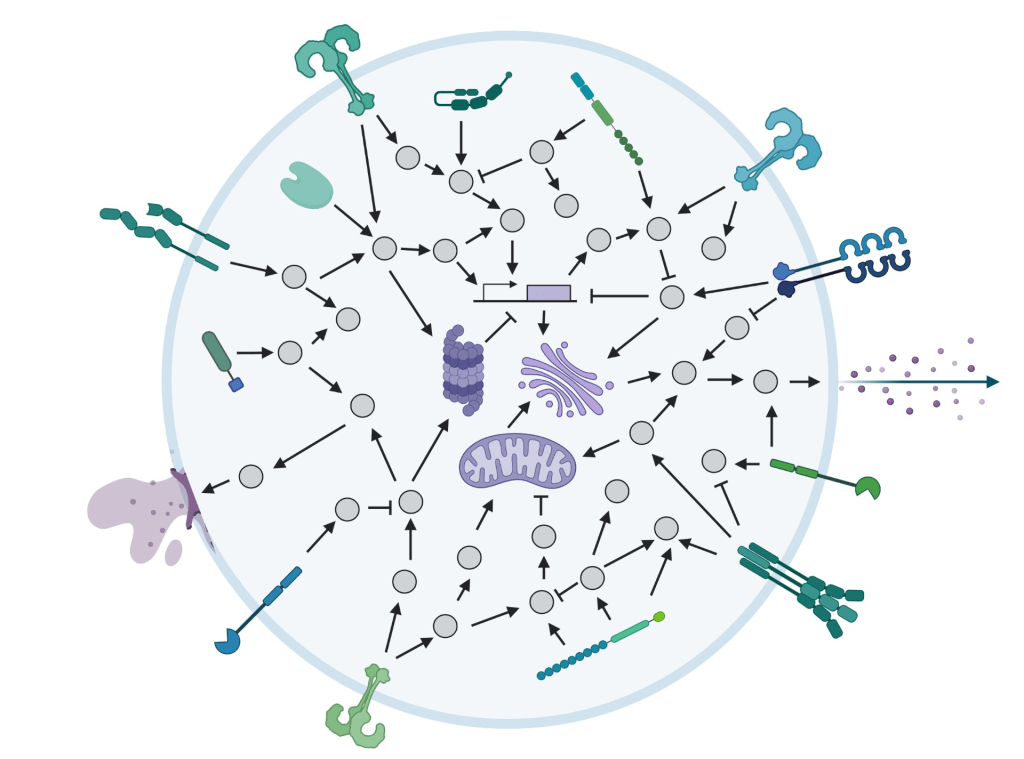
Two sets of innate immune proteins detect pathogens. Pattern recognition receptors (PRRs) bind microbial products, whereas guard proteins detect virulence factor activities by the surveillance of homeostatic processes within cells. The Kagan lab studies several aspects of PRR and guard protein biology, with particular focus on Toll-like Receptors, RIG-I like Receptors, cGAS-STING and the PRRs and guards that stimulate inflammasomes. These proteins control most (perhaps all) aspects of inflammation and immunity to infection, tissue injury and cancer.
Synthetic biology

Diverse innate immune cellular responses are transduced through supramolecular organizing centers (SMOCs), which represent the signaling organelles of the innate immune system. The signaling components within SMOCs are modular in nature, such that functional units can be rearranged to rewire downstream outputs. For example, we have engineered myddosomes and inflammasomes to promote interferon activity, and redesigned the LPS receptor caspase-4 to operate as an IL-1β converting enzyme (ICE). Furthermore, we designed synthetic SMOCs that drive chemically-inducible innate immune activities within cells. By exploiting the modular information processing of cells, we can use synthetic biology to engineer new functions and pressure-test biological causality to uncover novel aspects of natural pathway operation.
Anti-tumor Immunity

The Kagan lab studies how innate immune activities in dendritic cells can be utilized to stimulate robust and protective T cell responses to cancer. We are interested in defining the mechanisms of action of classic and next-generation vaccine adjuvants, which stimulate five key activities in dendritic cells needed for robust T cell mediated immunity. These activities include 1) MHC-mediated presentation of protein antigens, 2) T cell costimulatory molecule expression, 3) Effector T cell activating cytokine expression, 4) DC migration to the lymph node that drains the cancerous tissue, and 5) production and release of the memory inducing cytokines interleukin (IL)-1β and type I interferon (IFN). The former cytokine (IL-1β) mediates CD4+ and CD8+ T cell activities whereas the latter (IFN) primarily mediates CD8+ T cell activities. Each of these five DC activities is necessary for the differentiation of naïve T cells into robust and durable mediators of anti-tumor (and anti-infective) immunity.
 Kagan Lab
You must be logged in to post a comment.